Best Worm Bins for Apartments: 10 Indoor Systems Compared
Food scraps pile up fast in small spaces. You know the drill—banana peels, coffee grounds, wilted lettuce. Tossing them in the trash feels like a waste. But a big outdoor compost pile? Not happening when your "yard" is a fire escape. Here's the thing: worms don't care about square footage. A solid indoor vermicomposting setup turns your kitchen junk into black gold. No smell. No mess. Just a quiet box of red wigglers doing the heavy lifting while you binge Netflix.
The Real Deal: What Makes a Worm Bin Apartment-Friendly
Not every worm bin plays nice with apartment life. Some leak. Some stink. Some look like a science experiment gone wrong. The best worm bins for tight spaces nail three things: they seal up tight to keep fruit flies out, they stack slim so you can tuck them in a closet, and they drain excess moisture without turning your floor into a swamp. Oh, and they shouldn't hum like a fridge. If your bin needs its own room, it's not an apartment compost bin. It's a roommate.
Stacked Trays vs. Single Totes: The Layout Breakdown
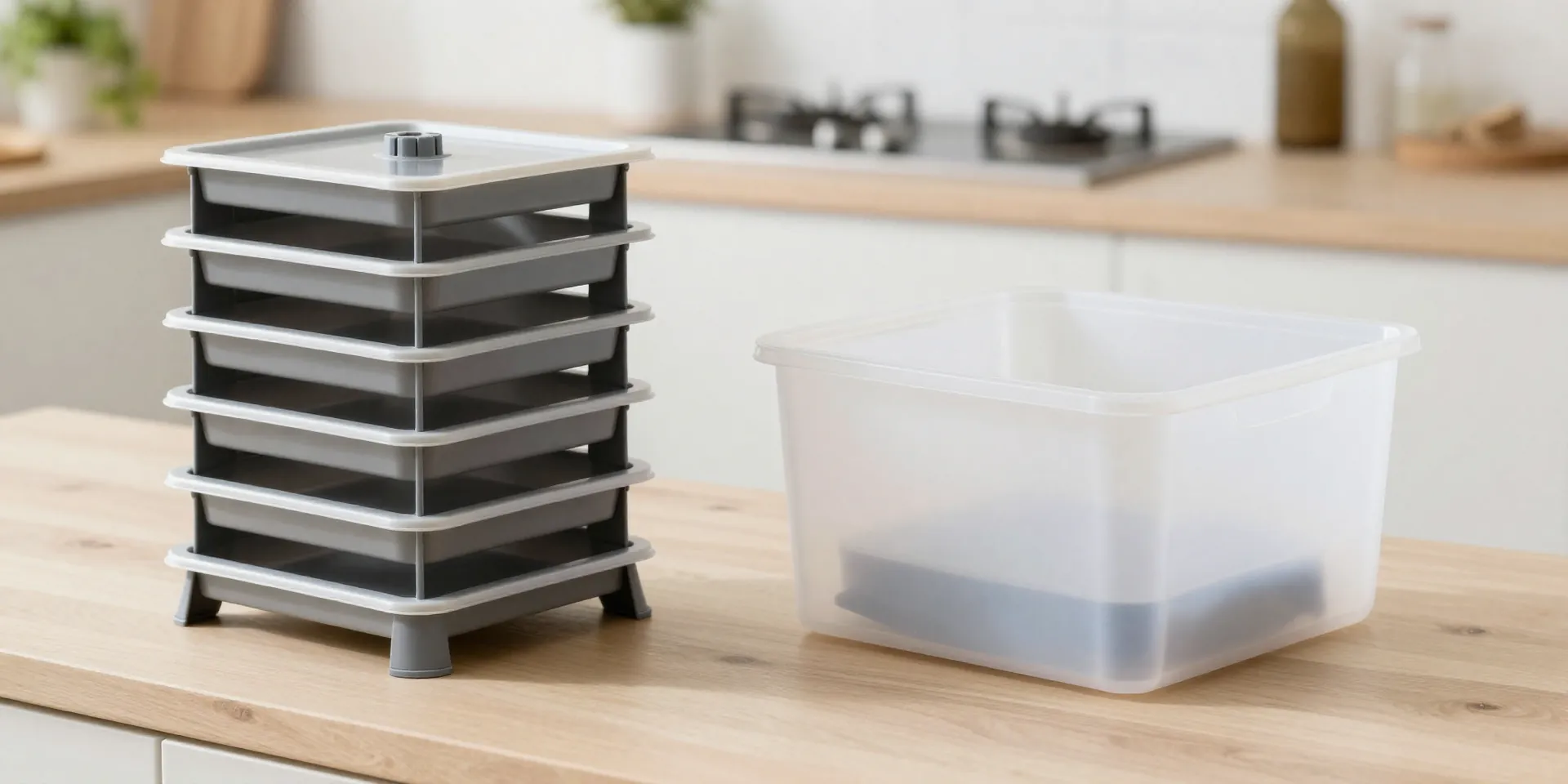
Stacked tray systems are the overachievers of the worm bin comparison world. Worms crawl up through layers as food settles, and you harvest castings from the bottom without digging through muck. Elegant. Tote-style bins? Way cheaper. Way simpler. You chuck food in one end, scoop dirt out the other. But you will dig. You will get worm dirt under your nails. Both work. One just feels more like a tool, the other more like a hobby.
Flow-Through Bins: The Set-It-and-Forget-It Crowd
Flow-through designs are for people who want compost but don't want a relationship with it. Feed the top, crank the bottom, black gold falls out. No layers to swap. No trays to restack. But here's the catch—they're usually bigger. Heavier. If you're in a fifth-floor walkup, hauling one of these up the stairs might make you rethink your life choices. Great for dedicated indoor vermicomposting nerds. Overkill for a studio with a teacup pig and two plants.
What About DIY? The Tote Bin Underdog
Some folks swear by the classic DIY tote. Grab a Rubbermaid bin, drill some holes, add shredded newspaper, dump in worms. Done. It costs maybe fifteen bucks. It works. But it also requires you to be the engineer, the repair guy, and the smell detective. If your bin starts reeking, that's on you. No customer service line to call. For the tinkerers? Perfect. For everyone else who just wants the best worm bins without a side project? Maybe skip the arts and crafts.
The Smell Test and Other Apartment Dealbreakers
Let's cut to it. Smell is the make-or-break factor. A healthy worm bin smells like wet earth after rain. A sick one smells like a dumpster behind a fish market. The difference usually comes down to airflow and balance. Too much food, not enough bedding, and your indoor vermicomposting dream becomes a nightmare. Good bins have tight lids and ventilation that works. Cheap bins pretend to. If you're sharing walls with neighbors, trust me, you want the good bin.
Picking the Winner for Your Space
At the end of the day, the right apartment compost bin depends on your tolerance for fuss. Got zero patience? Go flow-through or stacked trays. On a budget and handy with a drill? The DIY tote is your beast. Living in a closet-sized studio? Slim vertical systems win every time. The best worm bins aren't the flashiest. They're the ones you actually use. Because a bin that sits empty is just a very ugly box.